Playbooks
TURN STRATEGY INTO REPEATABLE EXECUTION
Talented teams still execute inconsistently when there is no shared system. Reps default to habits. Regions improvise. Handoffs slip. Our Playbook offerings turns your go-to-market strategy into clear, repeatable actions for every role and every moment that matters. You leave with playbooks your team runs from first touch to renewal, plus the activation plan that makes them stick.
Trusted by 1,000+ Companies Just Like Yours










A strong strategy still stalls without a system to run it
Execution rarely breaks in the strategy deck. It breaks in the field. Reps improvise, handoffs slip, and the same deal runs three different ways depending on who owns it. Each one is a signal that the strategy was never turned into a system teams can run.

Execution depends on your best people
When success rides on a few strong reps and a few long-tenured managers, it does not survive turnover, new hires, or scale. Growth slows every time the team changes, because the knowledge lives in people instead of the system.

The moments that matter run differently every time
Discovery, qualification, handoff, renewal. The highest-stakes moments are left to individual judgment, so quality swings from deal to deal. Precision disappears exactly where it matters most.

Training happens, but behavior does not change
Teams get trained, then revert under pressure. Without an in-the-moment guide and a manager who reinforces it, enablement becomes activity that does not show up in real customer interactions.
Make the right process the default
Playbooks turn your go-to-market strategy into clear, repeatable actions for every role and every stage of the Bowtie, our full-lifecycle model of how recurring revenue is won, kept, and grown. Each playbook defines what good looks like at the moments that matter, so reps, managers, and customer success run the same proven motion instead of improvising.
When execution is designed, performance stops depending on individuals. New hires ramp against a standard. Managers coach against a shared definition of good. The result is consistent execution that holds under pressure and scales as you grow.
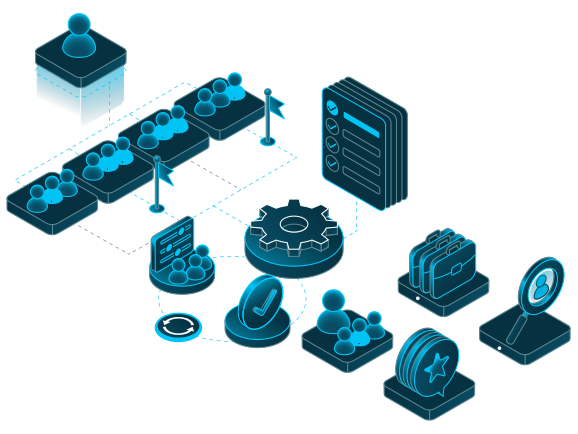
8 Playbooks to Deploy Across the Bowtie

Demand Generation Playbook

Prospecting Playbook

Sales Playbook

Onboarding & Adoption Post-Sale Playbook

Impact & Retention Post-Sale Playbook

Expansion & Growth Post-Sale Playbook

Manager Coaching Performance Playbook

Manager Deal Opportunity Review Playbook
Demand Generation Playbook
Marketing can generate volume that never converts. The Demand Generation Playbook designs a demand engine around your growth targets, not activity, with a diagnosed funnel, a prioritized channel strategy, and a quarterly plan. Your team turns spend into qualified pipeline it can predict.
Example Deliverable:
Prospecting Playbook
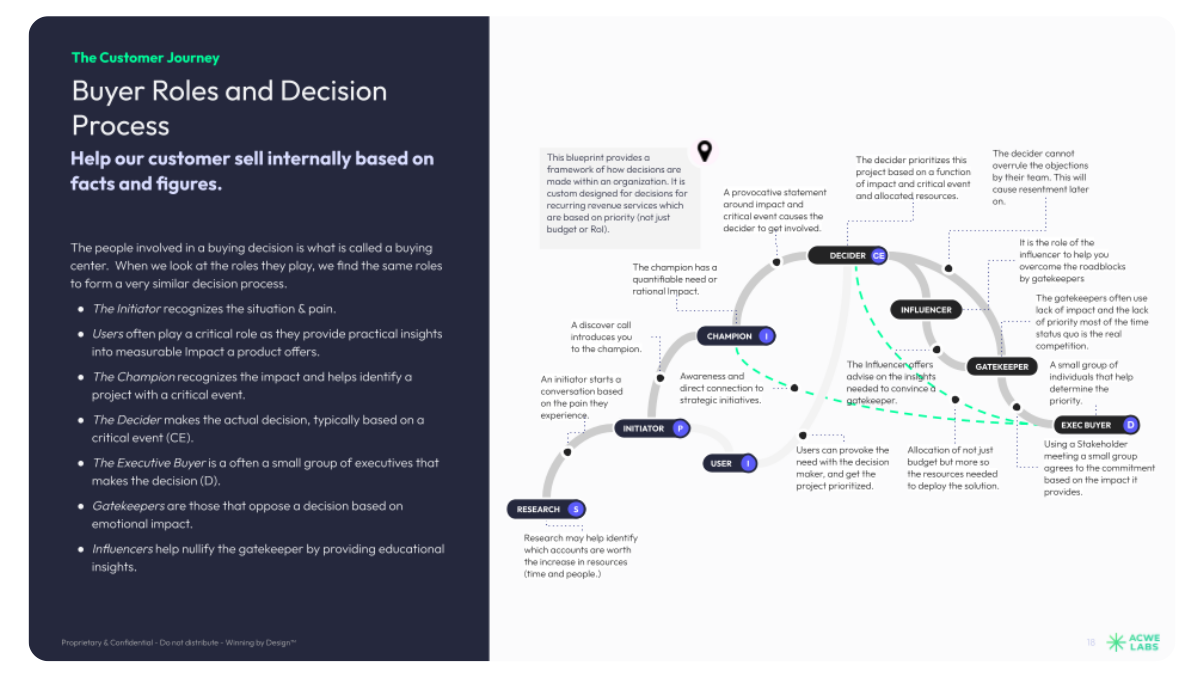
Prospecting results swing with rep tenure and effort. The Prospecting Playbook gives your BDR and SDR team a designed lead flow with clear entry and exit criteria, plus the blueprints, sequences, and objection responses to open more of the right conversations. Pipeline creation becomes a repeatable motion instead of a talent lottery.
Example Deliverable:
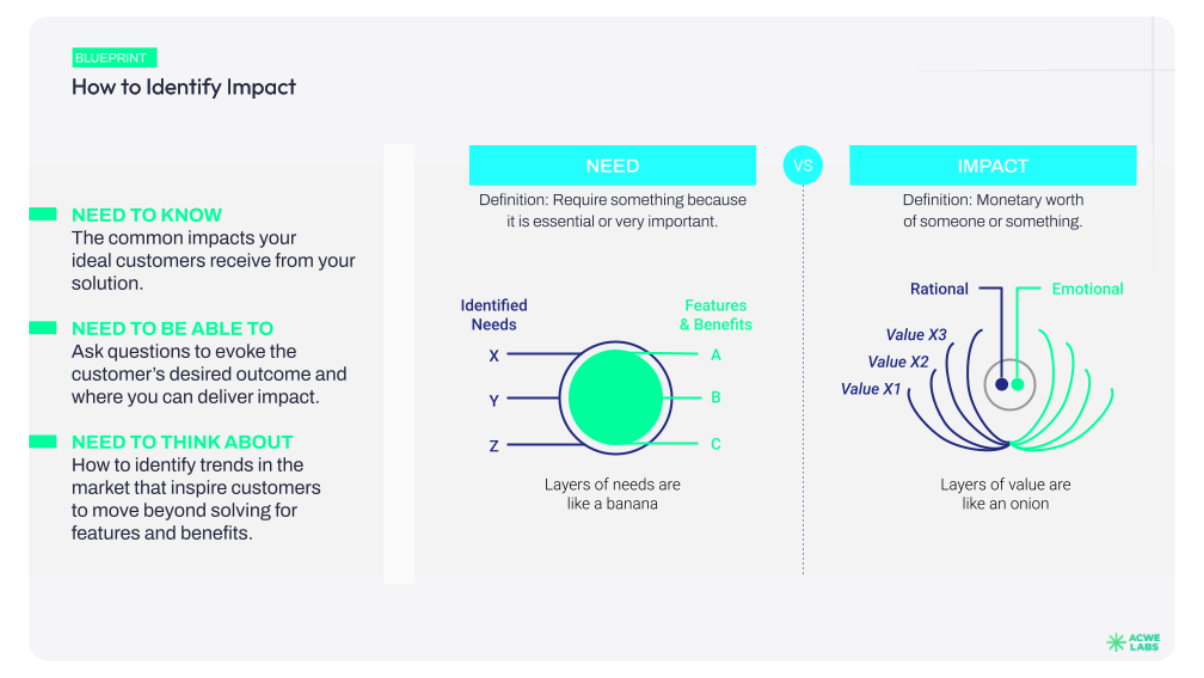
Sales Playbook
Every rep sells a little differently, and forecast quality pays for it. The Sales Playbook standardizes how deals move, defining each stage, the moments that matter, and the actions that advance an opportunity. Reps qualify, multi-thread, and progress deals the same proven way, so win rates stop depending on who owns the deal.
Example Deliverable:
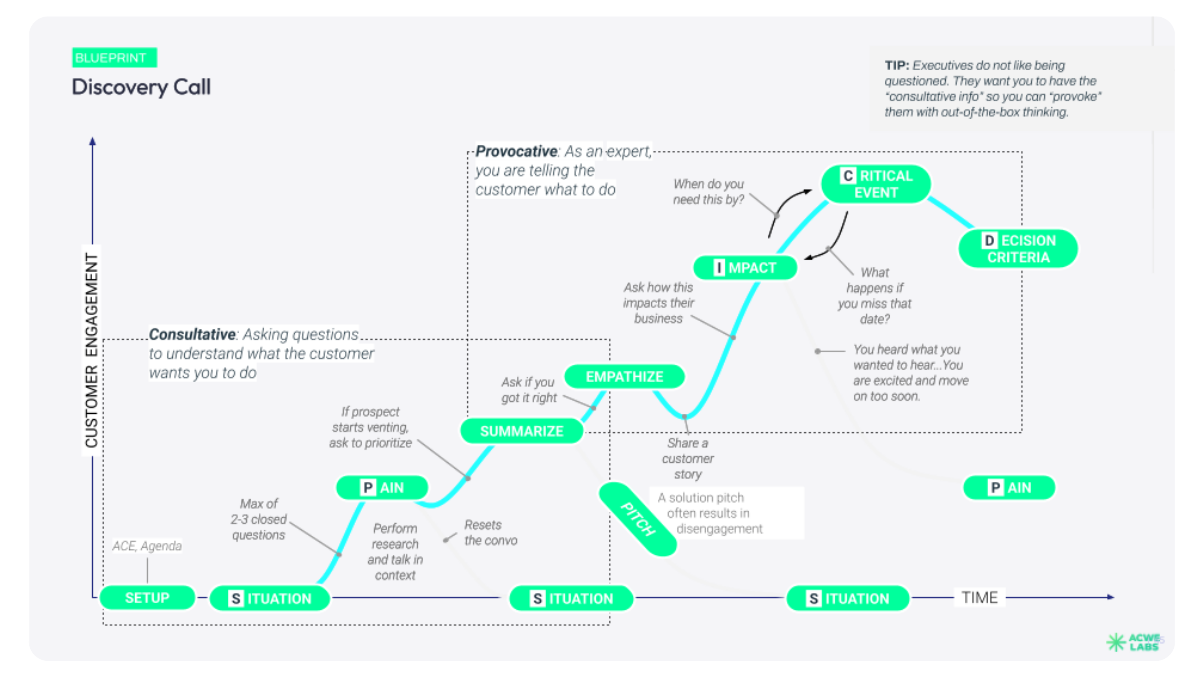
Onboarding & Adoption Post-Sale Playbook
The value a customer felt at signature fades if onboarding drifts. The Onboarding & Adoption Playbook designs a clean sales-to-CS handoff and a path to first value with clear milestones and ownership. Customers reach impact faster, adoption climbs, and the renewal conversation starts from strength.
Example Deliverable:
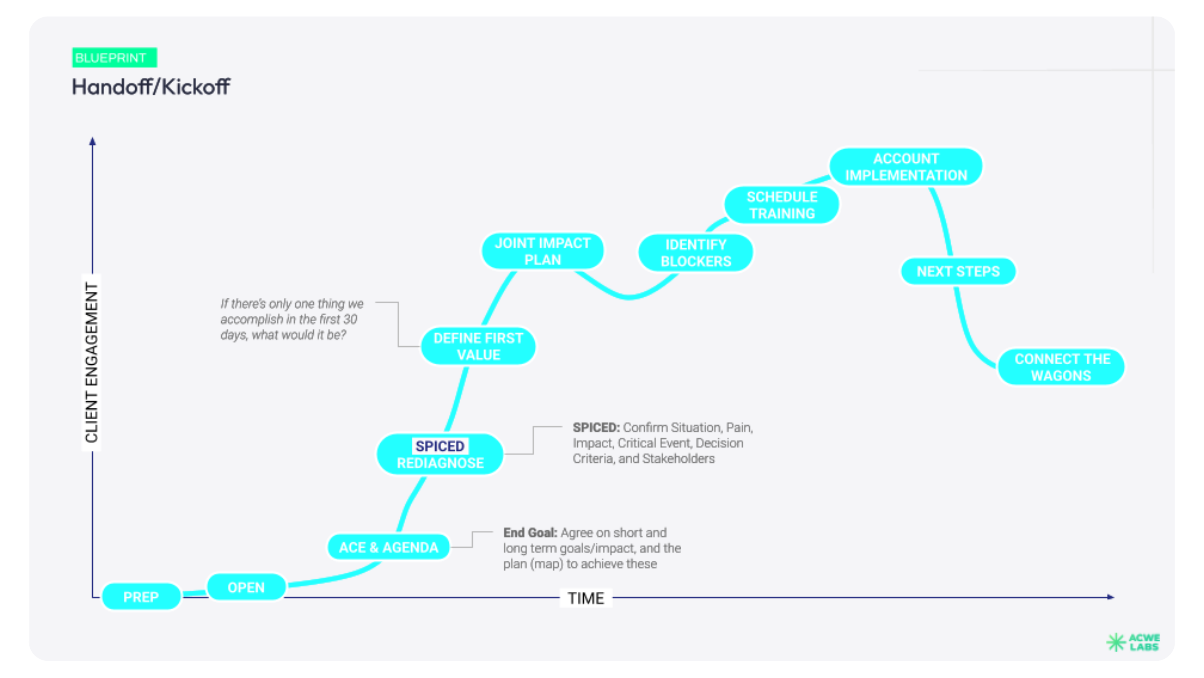
Impact & Retention Post-Sale Playbook
Renewals get risky when value goes unmanaged between onboarding and the renewal date. The Impact & Retention Playbook builds a proactive cadence of milestones, business reviews, and renewal steps with clear ownership. CS teams surface risk early and prove impact continuously, so renewals are earned across the year rather than chased at the end.
Example Deliverable:
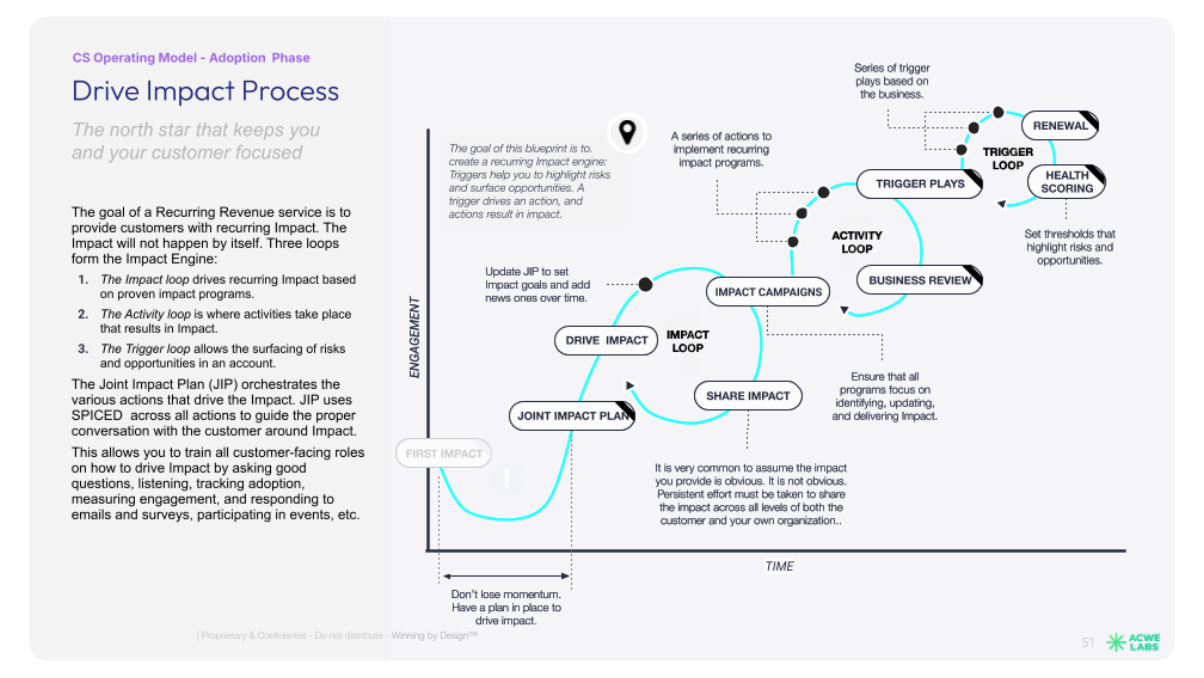
Expansion & Growth Post-Sale Playbook
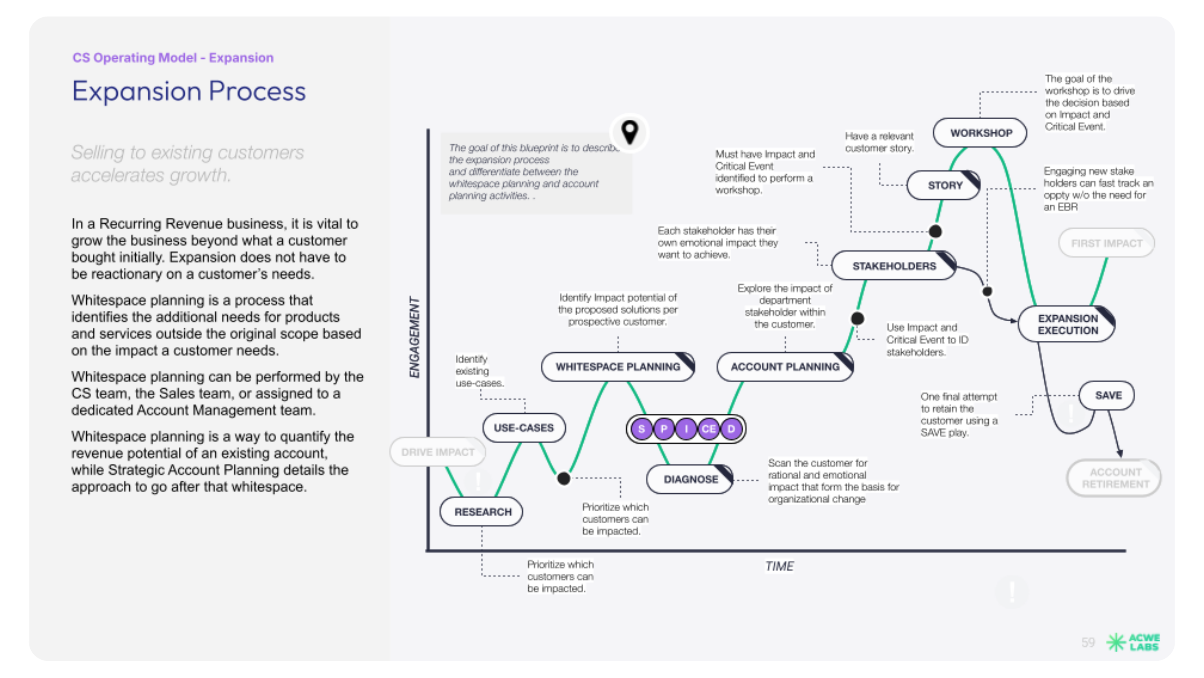
Expansion too often depends on which account manager happens to spot the opening. The Expansion & Growth Playbook makes it a system, with whitespace analysis, account planning, and trigger plays that surface expansion at the right moments. CS, AM, and Sales align around one motion, so net revenue retention grows on structure instead of luck.
Example Deliverable:
Manager Coaching Performance Playbook
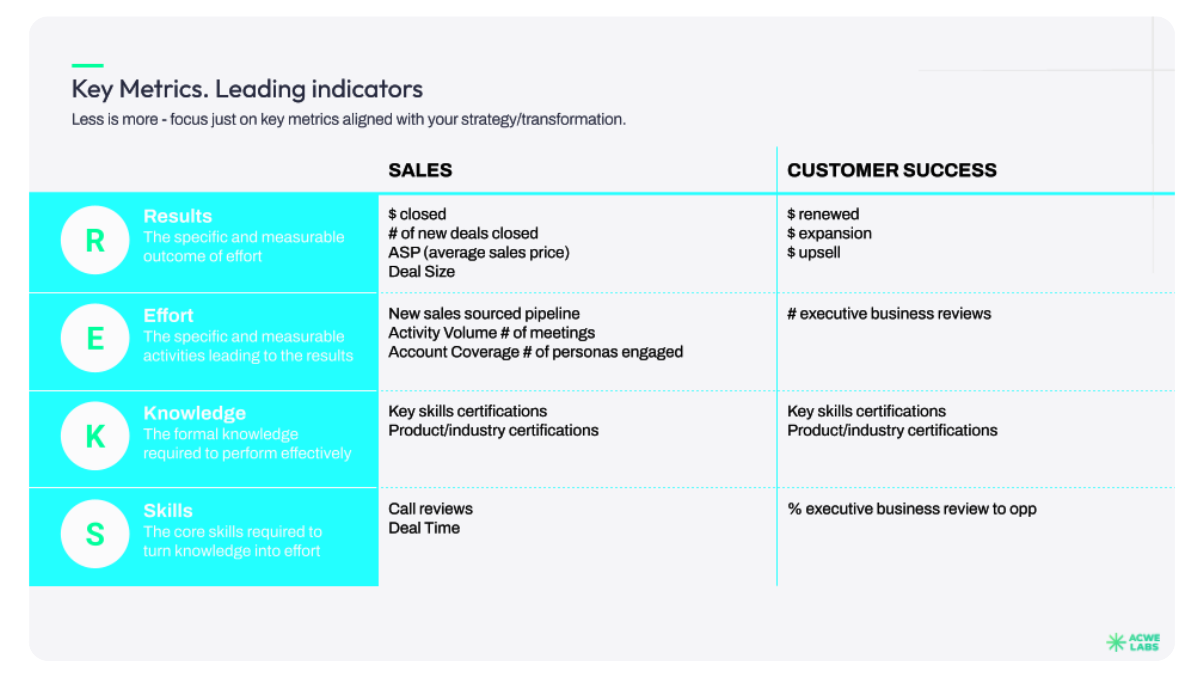
Most managers were promoted for selling, not coaching, so reinforcement is inconsistent. The Manager Coaching Performance Playbook gives managers a repeatable coaching system built on REKS, our framework that balances Results and Effort with Knowledge and Skills. Managers run consistent cadences and coach to metrics, so the whole team performs closer to the level of your best.
Example Deliverable:
Manager Deal Opportunity Review Playbook
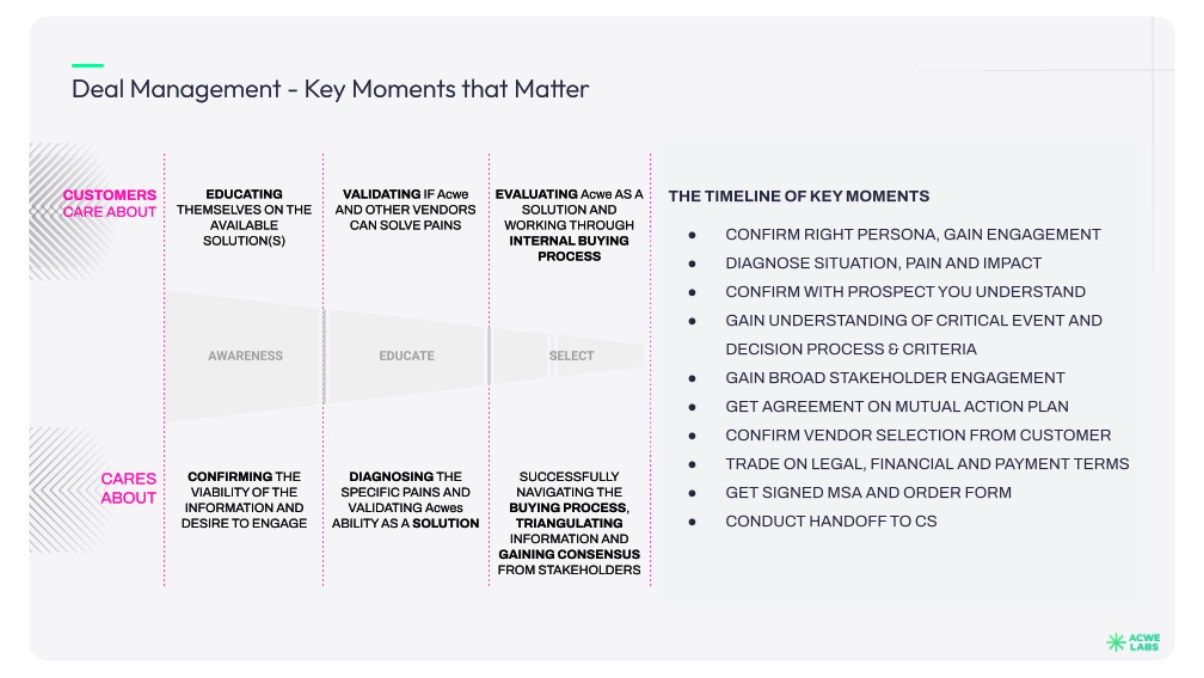
Deal reviews too often become status updates that miss the real gaps. The Manager Deal Opportunity Review Playbook gives managers a structured way to inspect live deals, anchored in SPICED, our customer-centric language for qualifying and advancing opportunities. Managers spot what is missing, ask sharper questions, and coach deals forward, so more of the pipeline actually closes.
Example Deliverable:
What You Get with
Playbooks
What’s included:
→ A designed process for your motion
Stages, entry and exit criteria, and the moments that matter, mapped to the Bowtie so everyone works from the same picture.
→ Customized blueprints
Visual guides for each high-stakes moment, built for your buyers and your motion, not generic best practice.
→ Ready-to-use assets
Templates, sequences, scripts, and objection responses your team can put to work the day the playbook lands.
→ Manager coaching tools
Scorecards, cadences, and coaching questions that let managers reinforce the playbook against real work.
→ Review cycles and a delivery readthrough
Collaborative workshops and feedback rounds, so the playbook reflects how your team actually sells and serves.
→ An activation roadmap
A staged plan, often 30/60/90, that turns the playbook into daily behavior and keeps it running after we leave.
Playbooks
Turn your go-to-market strategy into repeatable execution across every motion. Each playbook designs the process, blueprints, and assets your team needs at the moments that matter, from demand generation to renewal. Your team leaves running one proven motion, with managers equipped to coach it and an activation plan that makes it stick.

The Science of Revenue, Proven in Practice
Our frameworks drive repeatable results across sales, success, and revenue operations—validated through customer performance data and real-world outcomes.

Decrease in length of sales cycle

Increase in wins
Increase in ARR year over year

Increase in outbound pipeline share
Your Path to Repeatable Execution
Work with the Experts Building
Playbooks Across the GTM





Built for the Leaders Scaling the GTM
For CROs
You own the number, and the system that has to produce it quarter after quarter. When execution rides on your best reps, the number gets fragile the moment they leave or the team grows.
- Standardize how deals are prospected, sold, and renewed across every rep and region
- Improve forecast accuracy by making qualification and deal progression consistent
- Reduce the ramp time new hires need to reach full productivity
- Give managers a shared standard to coach against instead of opinion
- Build a revenue engine that performs the same way as you scale

For Rev Ops / GTM Ops
You are asked to make the system work, not just report on it. Playbooks give you the operational standard that turns strategy and process design into execution teams actually follow.
- Turn your operating model into blueprints and assets teams use daily
- Align process, data, and behavior so signal quality improves across the funnel
- Reduce the fire drills caused by inconsistent execution upstream
- Give managers and reps one source of truth for how work gets done
- Support scale without rebuilding the process every quarter

For Enablement
You are measured on adoption, not activity. Playbooks give you a designed system to enable against, so training turns into behavior that sticks.
- Replace one-time training with a playbook teams run in real work
- Standardize what good looks like across roles, regions, and motions
- Equip managers to reinforce the playbook through coaching
- Cut ramp time with a shared standard new hires can learn against
- Prove enablement impact through execution that actually changes
For CMOs
You drive demand, and the results depend on how well the funnel executes downstream. The demand and prospecting playbooks connect marketing intent to how sales engages, so pipeline quality improves, not just volume.
- Design a demand engine built around pipeline quality, not lead counts
- Align marketing, prospecting, and sales around one motion and shared definitions
- Reduce friction at the handoff between marketing and sales
- Reinforce sales-ready messaging consistently in live conversations
- See campaigns translate into qualified pipeline more reliably

For CEOs
You are accountable for growth, and execution risk usually hides until results miss. Playbooks reduce the dependency on hero performers and make growth something the system produces.
- Ensure strategy shows up consistently in real customer interactions
- Reduce reliance on a few strong individuals and institutional memory
- Create confidence that execution can scale before adding headcount
- Align leaders around how growth actually happens in the field
- Move forward knowing the motion holds under pressure

For CFOs
You are responsible for efficient, predictable growth. Playbooks improve the return on the training, tooling, and headcount you already fund by making execution consistent.
- Increase the return on enablement and tooling already in place
- Reduce forecast variability caused by inconsistent execution
- Cut wasted spend on training that does not change behavior
- Improve predictability before approving new scale investments
- Allocate capital knowing the operating model is actually followed

Trusted by Leading Revenue Teams


Frequently Asked Questions
What is the Playbooks offering?
Playbooks turn your go-to-market strategy into repeatable execution for a specific motion or role. Each of the eight playbooks define the process, the moments that matter, and the assets your team uses to run them. Together they cover the full customer lifecycle, from first touch to renewal.
What playbooks are available?
The offering includes eight playbooks that span the full customer lifecycle.
- Demand Generation and Prospecting build pipeline.
- Sales standardizes how deals progress.
- Onboarding & Adoption, Impact & Retention, and Expansion & Growth run the post-sale motions.
- Manager Coaching Performance and Manager Deal Opportunity Review equip managers to reinforce execution across the team.
Every playbook ends with activation, the step that turns it from a document into daily behavior through team rollout, manager coaching, and an enablement plan.
How is this different from playbooks we could build internally?
The difference is design and adoption. WbD playbooks are built on the Bowtie and SPICED, proven models for how recurring revenue is won and how customers decide, so they reflect how buyers actually move rather than internal opinion. Every engagement also includes activation, so the playbook becomes daily behavior instead of a document nobody opens.
What is included in a Playbooks engagement?
Each engagement includes a designed process, customized blueprints, and ready-to-use assets for your chosen motion. You also get manager coaching tools, collaborative review cycles, and an activation roadmap. Specific deliverables depend on which playbook and motion you select.
What outcomes should we expect from a Playbook engagement?
Expect more consistent execution across reps, regions, and motions. Teams run the same proven motion, managers coach against a shared standard, and new hires ramp faster against a clear definition of good. Outcomes focus on behavior change first, which is what makes performance improvement durable.
How long does a Playbook engagement last?
Most playbook engagements run 4-8 weeks from kickoff to final delivery. Prospecting and sales playbooks typically take about six weeks. Post-sale playbooks run six to eight weeks, and manager playbooks about four.
How long before we see an impact on execution?
Teams usually begin running the playbook within the engagement, during activation. Behavior change shows up first in the moments that matter, like cleaner handoffs and more consistent discovery. Durable impact on metrics like win rate, ramp time, and retention builds over the following quarters as the motion holds.
How do you measure whether the playbook is working?
Effectiveness is measured by whether the designed behaviors show up consistently in the field. Activation includes guidance on the leading indicators to watch, such as adoption in the moments that matter, conversion at key stages, and manager coaching cadence. These signals show where the playbook is holding and where it needs reinforcement.
Which roles need to be involved?
A playbook engagement needs an executive sponsor, a working group, and the frontline team that owns the motion. The sponsor provides direction and sign-off. Managers and reps contribute to the design and are the ones who run it, so their involvement is what makes adoption stick.
What happens after the engagement ends?
Your team leaves with a complete playbook, the assets to run it, and an activation roadmap that keeps it working. Managers are equipped to reinforce the playbook through coaching, and you have the leading indicators to see when execution drifts. The engagement is designed to reduce dependence on outside support over time, not create it.
Can we start with a single playbook?
Yes. Most teams start with the motion where execution is most inconsistent, then expand playbook by playbook across the funnel. Each playbook stands on its own and connects into one system as you add the next.
How much does a Playbook engagement cost?
Engagements do vary in price depending on scope, company size, and level of customization. Please contact us for a quote tailored to your business and specific needs.
How do we know if this the right next step for us?
A playbook is the right step when your strategy is sound but execution is inconsistent. If results ride on your best people, if training has not changed behavior, or if the same motion runs differently across teams, a playbook turns strategy into a system your team can run. If the real gap is in how the system is designed, a Design engagement may come first.
Talk with a GTM expert about your growth
We’ll help you understand what’s blocking predictable revenue and recommend the best path forward for your team.
-
Get clarity on the root causes slowing your growth
-
Understand which GTM improvements will deliver the biggest impact
-
Explore pricing, timelines, and the right engagement for your goals