ICP Development
FOCUS ON THE CUSTOMERS WORTH WINNING
When every account looks like a target, teams spread effort thin and pipeline quality slips. ICP Development defines who your best customers actually are, built from firmographics, demographics, and behaviors, so sales, marketing, and customer success work from one definition of fit. You leave with a validated profile, prioritized segments, and buyer personas to put to work.
Trusted by 1,000+ Companies Just Like Yours









When everyone is a target, growth gets expensive
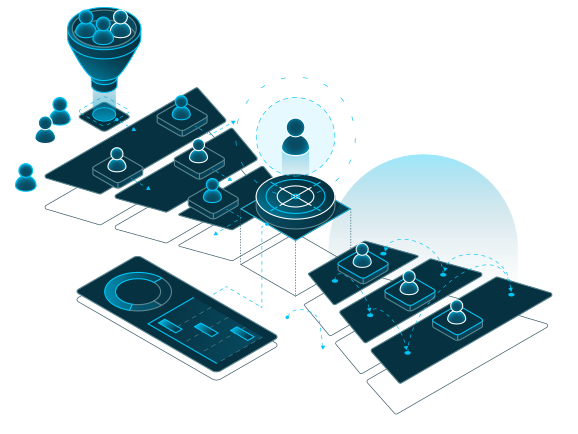
A blurry ICP rarely fails in one place. It fails quietly across the funnel. Teams chase accounts that were never a fit, campaigns speak to no one in particular, and the customers you win are the ones hardest to keep. Each is a sign that fit was assumed, not defined.

Effort spreads across the wrong accounts
Reps and campaigns work a target list that is too broad. Time and spend go to accounts that were never likely to buy. The pipeline that results looks larger on the dashboard than it is in practice.

Sales, marketing, and CS define fit differently
Marketing targets one profile. Sales works another. Customer success sees a third. Without a shared definition of the ideal customer, handoffs blur and every team optimizes for a different buyer.

The customers you win are the hardest to keep
Deals close, then churn early or never expand. When acquisition ignores who actually succeeds with the product, growth leaks out the back faster than it comes in the front.
Make fit a decision, not a guess
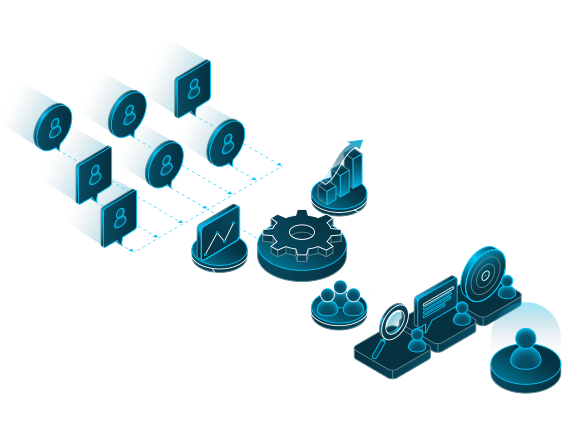
ICP Development turns a vague sense of the ideal customer into a defined, validated profile. We build it from firmographics, demographics, and behaviors, then pressure-test it against your own data and your team’s frontline experience. The result is one definition of fit that sales, marketing, and customer success can all work from.
When fit is defined, focus follows. Resources move toward the accounts most likely to convert, expand, and retain, and away from the ones that quietly drain them. Prioritized segments tell teams where to spend first. Buyer personas give every conversation a clearer target. Growth gets more efficient because effort is aimed, not spread.
What You Get with
ICP Development
What’s included:
→ A defined and validated ICP
Your ideal customer profile, built across firmographics, demographics, and behaviors, and validated against your data and your team’s experience.
→ High-fit segment analysis
The segments most likely to convert, expand, and retain, so you know where to focus before you spend.
→ Buyer personas
Clear profiles of the people who buy and succeed with your product, ready to sharpen messaging and conversations.
→ Firmographic analysis
A data-backed view of the accounts that fit, drawn from a review of up to five of your data sources.
→ Target account list guidance
Guidance on how to source and prioritize your target account lists, so the profile becomes an actionable list your team can trust.
→ Criteria ready to embed
ICP criteria structured to drop into prospecting, campaigns, and playbooks, so the definition shows up in daily execution rather than a slide.
ICP Development
Define and validate the customer profile worth building your go-to-market around. Your team leaves with one shared definition of fit, prioritized segments, and buyer personas that focus resources where they are most likely to convert, expand, and retain.

See What ICP Development Delivers
INSIDE THE ANALYSIS
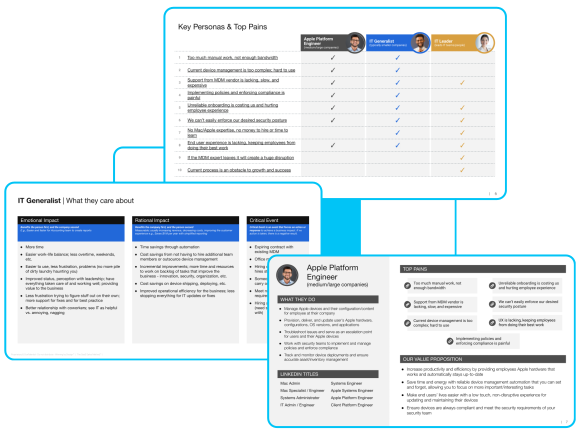
A finished ICP is more than a one-line definition. It is a profile, a set of prioritized segments, and buyer personas your team can act on. These sample deliverables show how firmographics, demographics, and behaviors come together into a clear picture of fit, and how that picture translates into where to focus and who to talk to.
The Science of Revenue, Proven in Practice
Our frameworks drive repeatable results across sales, success, and revenue operations—validated through customer performance data and real-world outcomes.

Decrease in length of sales cycle

Increase in wins
Increase in ARR year over year

Increase in outbound pipeline share
Your Path to a Focused Go-to-Market



Built for the Leaders Scaling the GTM
For CMOs
You own how the company defines and reaches its market. A blurry ICP shows up as soft pipeline and campaigns that speak to everyone and land with no one.
- Define one profile of fit that sales and CS work from too
- Aim campaigns and spend at the segments most likely to convert
- Measure pipeline quality, not just lead volume
- Give every persona a clear message and a clear buyer
- Focus the go-to-market before you scale it
For Rev Ops / GTM Ops
You turn strategy into systems. Without a defined ICP, routing, scoring, and target lists get built on assumptions that differ from team to team.
- Ground segmentation, scoring, and routing in a validated profile
- Prioritize target accounts so effort follows fit
- Give every team one definition of the ideal customer to operate from
- Structure ICP criteria to embed into your CRM and plays
- Improve signal quality across pipeline and conversion
For CROs
You own the number and the target list your team works. When fit is a guess, reps spend cycles on accounts that were never going to buy.
- Point selling effort at the accounts most likely to close and stay
- Reduce time lost chasing accounts that do not fit
- Align sales and marketing on who to pursue and why
- Improve pipeline quality, not just pipeline volume
- Build a target list your team can trust
For CEOs
You set where the company competes. A go-to-market aimed at everyone spreads resources thin and slows efficient growth.
- Focus the company on the customers it serves best
- Deploy resources where they are most likely to compound
- Align the executive team on one definition of the ideal customer
- Make growth more efficient before adding cost
- Build focus that scales with the business
For CFOs
You fund growth and answer for its efficiency. Effort spread across poor-fit accounts raises the cost of every dollar of revenue.
- Reduce spend directed at accounts unlikely to convert or retain
- Improve the efficiency of acquisition and retention
- Tie go-to-market investment to defined, high-fit segments
- Lower the cost of winning customers who stay and expand
- Gain a clearer basis for where growth dollars should go
Trusted by Leading Revenue Teams


Frequently Asked Questions
What is ICP Development?
ICP Development is an engagement that defines and validates your ideal customer profile, key segments, and buyer personas. It builds a clear picture of the customers most likely to convert, expand, and retain, using firmographics, demographics, and behaviors, so sales, marketing, and customer success work from one definition of fit. You leave with a validated ICP, prioritized segments, and personas ready to put to work.
What is an ideal customer profile (ICP)?
An ideal customer profile is a defined description of the customers your company serves best. It combines firmographics like company size and industry, demographics like role and buying authority, and behaviors like how customers adopt and expand. A strong ICP tells teams which accounts to focus on and which to pass by.
How is this different from the segmentation our team already does?
Most segmentation describes the market. ICP Development defines and validates who you should focus on within it. Rather than sorting accounts by size or industry alone, we build the profile from firmographics, demographics, and behaviors, then validate it against your own data and frontline experience so it reflects who actually succeeds with your product.
What is included in an ICP Development engagement?
An ICP Development engagement includes a defined and validated ICP, high-fit segment analysis, and buyer personas. The work includes two to three data-gathering workshops, up to five interviews across sales, management, and product marketing, a review of up to five of your data sources, two review cycles, and guidance on sourcing your target account lists. You receive ICP criteria structured to embed into prospecting, campaigns, and playbooks.
What outcomes should we expect from an ICP Development engagement?
You should expect a shared, validated definition of fit that focuses your go-to-market. Common outcomes include resources aimed at the segments most likely to convert, expand, and retain, tighter alignment across sales, marketing, and customer success, and higher pipeline quality as effort shifts away from poor-fit accounts. Outcomes depend on how the profile is adopted and acted on after delivery.
How long does an ICP Development engagement last?
An ICP Development engagement runs 6 weeks from kickoff to final delivery. That includes data gathering, defining and validating the profile, and two review cycles with your team. Timelines can vary with scope and data availability.
How do you define and validate the ideal customer profile?
We define the profile across three dimensions: firmographics, demographics, and behaviors. We gather evidence through workshops, interviews across sales, management, and product marketing, and a review of up to five of your data sources. We then validate the profile through two review cycles so it reflects the customers who actually convert, expand, and retain.
Which roles need to be involved?
ICP Development works best with input from sales, marketing, and customer success. Engagements typically include up to five interviews across sales reps, managers, and product marketing, plus an executive sponsor to align on how the profile will be used. Broad input is what makes the profile shared rather than owned by one team.
Do you source our target account list?
No. We provide guidance on how to source and prioritize your target account lists, and you source the actual accounts through your preferred data provider. ICP Development defines the profile and criteria so your list reflects real fit. System implementation is not included in the engagement.
What happens after the engagement ends?
You leave with a validated ICP, prioritized segments, buyer personas, and criteria ready to embed into prospecting, campaigns, and playbooks. Your team owns the profile and puts it to work across the go-to-market. Teams often follow ICP Development with account-based or messaging work to act on the profile faster.
How much does an ICP Development engagement cost?
Engagements do vary in price depending on scope, company size, and level of customization. Please contact us for a quote tailored to your business and specific needs.
How do we know if this the right next step for us?
ICP Development is likely the right next step if your team is spreading effort across too many accounts, if sales, marketing, and customer success define the ideal customer differently, or if the customers you win are hard to keep. If focus is the constraint, defining fit is where to start. A short conversation with our team can help you decide.
Talk with a GTM expert about your growth
We’ll help you understand what’s blocking predictable revenue and recommend the best path forward for your team.
-
Get clarity on the root causes slowing your growth
-
Understand which GTM improvements will deliver the biggest impact
-
Explore pricing, timelines, and the right engagement for your goals